 English
 русский
 Español
Email us now!
Email us now!
Industry News
 2026.05.15
 Industry News
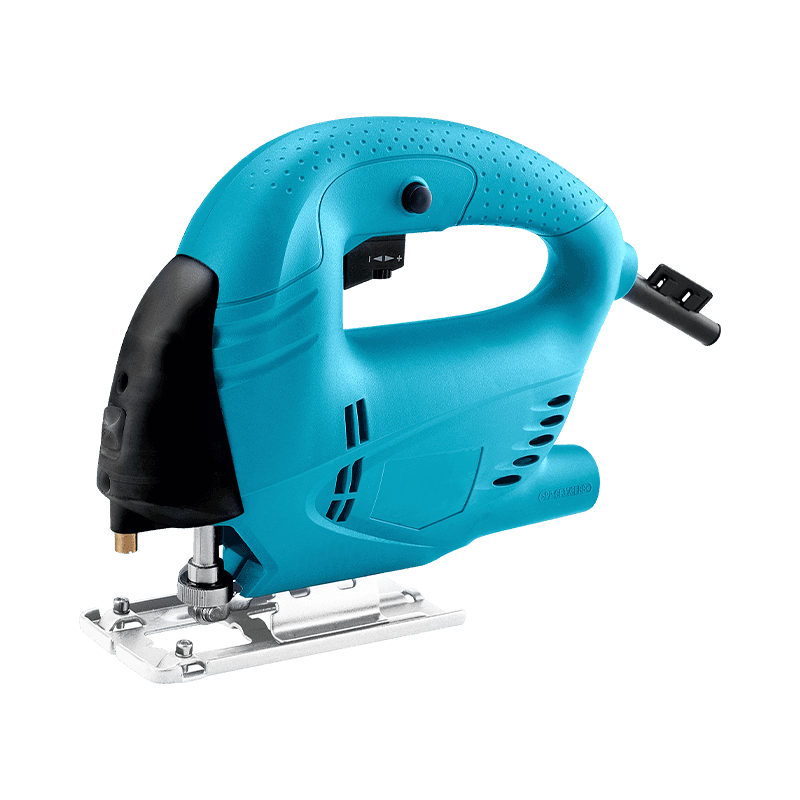
The curve saw has become an essential tool for craftsmen who need to cut intricate shapes and non-linear patterns. Unlike straight-cutting saws that follow a fixed line, a curve saw allows the blade to turn and follow curved paths in wood, plastic, and soft metals. Furniture makers and hobbyists have adopted the curve saw for creating decorative edges, cutting circles, and shaping irregular parts. The maneuverability of a curve saw explains its popularity in cabinet shops and home workshops. Manufacturers continue to produce curve saw models with variable speed controls and interchangeable blade types.
Blade design for a curve saw differs from standard straight-cutting blades. A narrow blade on a curve saw permits tighter turning radii for intricate scrollwork. The blade teeth of a curve saw are set in alternating directions to clear sawdust from the kerf. A finer tooth pattern on a curve saw produces smoother cuts for finished edges. A coarser blade on a curve saw removes material faster for rough shaping. The blade width of a curve saw determines the small radius of curve achievable.
Motor specifications for a curve saw affect cutting capacity and control. A variable speed motor on a curve saw allows the user to match blade speed to material hardness. A slower speed on a curve saw suits dense hardwoods that burn at high speeds. A faster speed on a curve saw works well for softwoods and plastics. The power rating of a curve saw typically ranges from 3 to 7 amps for home and hobby use. A curve saw with electronic speed control maintains consistent blade movement under load.
Tilt features on a curve saw expand cutting capabilities. A tilting table on a curve saw allows bevel cuts for angled edges and compound curves. The blade angle of a curve saw adjusts from vertical to 45 degrees for cutting chamfers. A curve saw with bevel capability produces mitered joints for picture frames and boxes. The tilt mechanism should lock securely to maintain angle during cutting. A positive stop on a curve saw at common angles speeds setup for repetitive cuts.
Throat depth of a curve saw determines big workpiece width. A small curve saw with 12-inch throat suits hobbyist projects and model making. A standard curve saw with 16-inch throat handles cabinet panels and furniture parts. A large curve saw with 24-inch or greater throat serves production work and oversized pieces. The throat depth measurement of a curve saw refers to distance from blade to back frame. A curve saw with deep throat capacity requires floor standing or heavy bench mounting.
Work table features of a curve saw support safe and accurate cutting. A cast iron table on a curve saw provides vibration-damping mass for smooth operation. The table insert of a curve saw is replaceable when worn by blade contact. A miter gauge slot on a curve saw accepts accessories for angled straight cuts. The table height of a curve saw should position the work surface at comfortable operating level. A dust port on a curve saw connects to shop vacuum for chip collection.
The curve saw will likely continue as a workshop staple for curved cutting tasks. For woodworkers and metalworkers needing precision shaping, the curve saw offers a practical solution.
Recommended Products
Contact Information
Mob: +86-13486952519
Whatsapp/wechat: +86-13486952519
E-mail: [email protected]
Add: Dawu Village, Huajie Town, Yongkang, Jinhua City, Zhejiang Province, China
Product
Contact Us!
Copyright © by Yongkang Zhongyuan Industrial & Trade Co. Ltd. Rights Reserved.

Curve Cutting Saw Factory