 English
 русский
 Español
Email us now!
Email us now!
Industry News
 2026.07.17
 Industry News
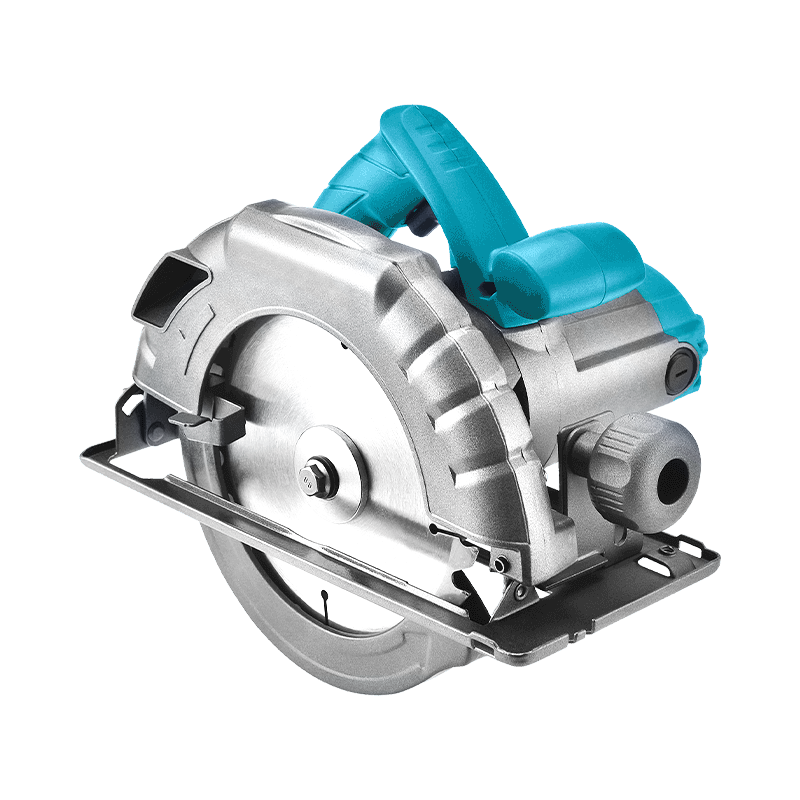
At its simplest, an electric circular saw spins a toothed blade at high speed, letting it push through wood, plywood, plastic, or even metal depending on the blade fitted. The motor drives the blade through a gear system, and the operator guides the saw along a marked line, letting the spinning teeth do the cutting rather than forcing the tool through material.
Corded and cordless versions both exist, and each comes with its own tradeoffs. Corded saws tend to deliver steady, uninterrupted power, which matters during long cutting sessions. Cordless models trade some of that constant power for mobility, letting users move freely around a site without hunting for an outlet.
Blade diameter plays a direct role in how deep a saw can cut. A common consumer-grade saw might run a 7-1/4 inch blade, while smaller trim saws use narrower blades for lighter, more detailed work. Larger blades cut deeper in a single pass, which matters when working through thicker stock like dimensional lumber.
A few things worth checking before buying:
Getting these details wrong at the sourcing stage usually means returns or mismatched accessories down the line, which is a headache nobody wants to deal with twice.
Motor strength is usually measured in amps for corded saws or voltage for cordless models. Higher amperage generally means the saw can push through denser material without bogging down mid-cut. That said, raw power isn't the only factor — blade sharpness and tooth count matter just as much for a clean, controlled cut.
Brushed motors remain common in budget and mid-range saws, while brushless motors have become more popular in recent years for running cooler and lasting longer under heavy use. Both types get the job done, but they suit slightly different use cases depending on how often the saw runs and under what load.
Most circular saws allow the blade to tilt, letting users make angled or beveled cuts rather than straight 90-degree ones. This adjustment usually ranges somewhere between 0 and 45 or even 56 degrees on some models, controlled through a lever or knob near the base plate.
Bevel accuracy matters more than people expect going in. A saw that drifts slightly off its set angle during a cut can throw off an entire project, especially in cabinetry or trim work where joints need to fit cleanly together.
The base plate, sometimes called the shoe, supports the saw against the material being cut and keeps the blade at a consistent depth and angle. Stamped steel plates are common in lighter-duty saws, while cast aluminum or magnesium plates show up in models built for heavier daily use, offering a bit more rigidity during longer cuts.
Handle design and grip placement affect control just as much as the cutting mechanism itself. A well-balanced saw sits comfortably in one hand and tracks a cut line without excessive pulling or wandering, something that becomes obvious fairly quickly once a user picks up two different models back to back.
An electric circular saw isn't a complicated tool once you break down what each part does — motor, blade, base plate, bevel adjustment — but getting the combination right for a specific job makes a real difference in how the tool performs. Whether it's framing a wall or trimming plywood in a home workshop, the fundamentals stay the same: match the blade to the material, keep the base steady, and let the motor do the work it's built for.
Recommended Products
Contact Information
Mob: +86-13486952519
Whatsapp/wechat: +86-13486952519
E-mail: [email protected]
Add: Dawu Village, Huajie Town, Yongkang, Jinhua City, Zhejiang Province, China
Product
Contact Us!
Copyright © by Yongkang Zhongyuan Industrial & Trade Co. Ltd. Rights Reserved.

Curve Cutting Saw Factory