 English
 русский
 Español
Email us now!
Email us now!
Industry News
 2026.02.13
 Industry News
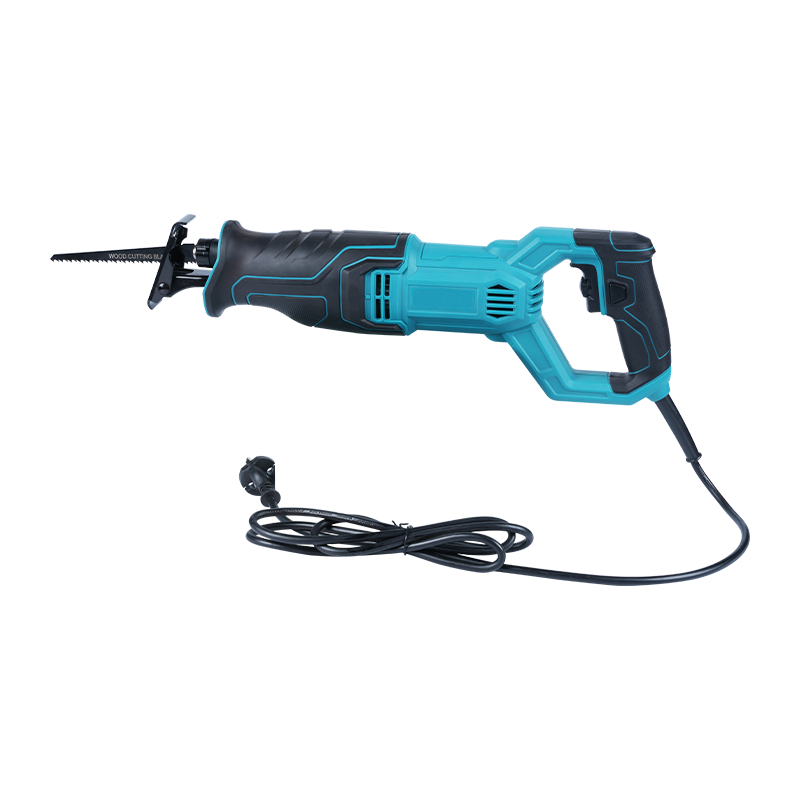
The landscape of industrial-grade power tools is defined by equipment capable of withstanding sustained, rigorous use in challenging environments. Within this category, the Heavy Duty Reciprocating Saw stands as an essential piece of machinery, engineered to tackle the lots of demanding cutting tasks across construction, demolition, metal fabrication, and emergency services. Characterized by robust construction, high power output, and features designed for professional endurance, the Heavy Duty Reciprocating Saw represents a class of tool where reliability and performance are non-negotiable. Its continued evolution and adoption reflect the ongoing need in commercial and industrial sectors for equipment that can deliver consistent, powerful cutting action through a wide array of tough materials, from thick structural timber and nail-embedded wood to metal pipes, alloys, and masonry.
The defining attributes of a true Heavy Duty Reciprocating Saw are found in its core mechanical and electrical design. These tools are built around powerful motors, often exceeding 12-amp draws in corded versions or utilizing high-voltage lithium-ion battery platforms in cordless models, to deliver the high stroke rate and torque necessary for continuous operation. The housing and internal components are constructed from reinforced materials to manage vibration, dissipate heat effectively, and endure physical impacts common on job sites. A key feature is the robust tool-less blade clamping system, designed for quick, secure blade changes even under dusty or demanding conditions, accepting a universal range of reciprocating saw blades for different materials. This industrial-grade durability ensures that a Heavy Duty Reciprocating Saw remains operational under workloads that would compromise or disable lighter-duty consumer models.
The operational versatility of a Heavy Duty Reciprocating Saw is a primary driver of its widespread professional use. In building and demolition, it is the tool of choice for making plunge cuts into walls, cutting through joists and studs, dismantling wooden frameworks, and sizing roofing materials. For metalworkers, plumbers, and HVAC technicians, a Heavy Duty Reciprocating Saw equipped with the appropriate bi-metal or carbide-grit blade efficiently cuts through steel piping, conduit, ductwork, and various metal profiles. Its utility extends to landscaping for cutting tree roots and thick branches, and it is a critical tool in search and rescue operations for cutting through structural debris. The ability to be fitted with long blades and used in confined spaces makes the Heavy Duty Reciprocating Saw uniquely capable for tasks where other saws cannot reach or would be less effective.
The development of the Heavy Duty Reciprocating Saw is closely tied to progress in cordless technology and smart tool systems. The gap in raw power between corded and premium cordless models continues to narrow, with professional-grade cordless Heavy Duty Reciprocating Saw units offering performance that meets the needs of lots of industrial applications, bolstered by the convenience of cord-free operation. Integration with digital platforms for tool tracking, maintenance alerts, and performance customization is an emerging trend. Furthermore, advancements in brushless motor technology and more efficient battery chemistries promise to extend runtime and overall tool longevity. As infrastructure projects, renovation work, and industrial maintenance continue globally, the Heavy Duty Reciprocating Saw will remain an indispensable asset, constantly adapting to deliver the rugged, reliable performance that forms the backbone of heavy industrial cutting work.
Recommended Products
Contact Information
Mob: +86-13486952519
Whatsapp/wechat: +86-13486952519
E-mail: [email protected]
Add: Dawu Village, Huajie Town, Yongkang, Jinhua City, Zhejiang Province, China
Product
Contact Us!
Copyright © by Yongkang Zhongyuan Industrial & Trade Co. Ltd. Rights Reserved.

Curve Cutting Saw Factory