 English
 русский
 Español
Email us now!
Email us now!
Industry News
 2026.10.30
 Industry News
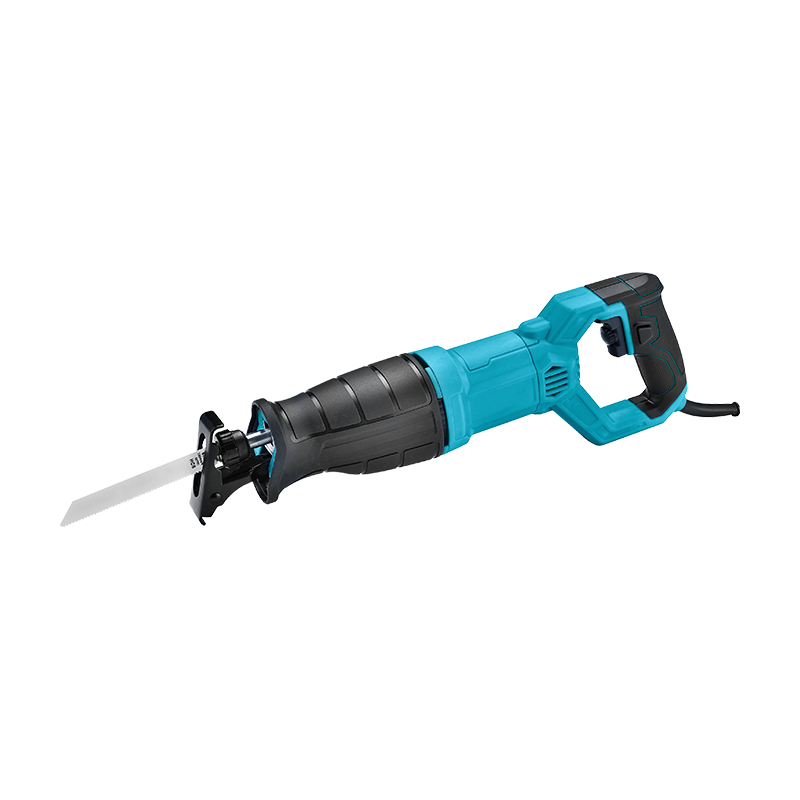
Lithium Reciprocating Saw models have become a practical presence in workshops and on construction sites where cordless operation and versatile cutting matter. These tools rely on lithium battery power to drive a back-and-forth blade motion that works across wood, metal, plastic and other common materials. This article reviews the functional traits that place the Lithium Reciprocating Saw in regular use among trades and fabrication teams.
A defining trait of the Lithium Reciprocating Saw is its independence from wall outlets. The lithium battery pack supplies consistent energy to the motor, allowing operators to move freely around a site or through a workshop. This freedom proves useful when cutting framing members, trimming pipes or working in areas where extension cords create obstacles.
Battery capacities in available models support extended sessions before a recharge becomes necessary. The absence of a cord also simplifies overhead cuts and work in confined spaces, where tangled lines can slow progress or create safety concerns. Crews that shift between indoor and outdoor locations often keep a Lithium Reciprocating Saw on hand for these reasons.
Motors in these saws deliver the force needed for a range of materials. Wood, metal stock up to several millimeters thick, plastic and PVC all fall within the typical cutting capability. Some configurations also handle denser items such as bone or frozen meat in specialized settings.
The reciprocating stroke length contributes to efficient material removal. Shorter strokes suit finer control, while longer strokes move through thicker sections more readily. Variable speed triggers let the operator match blade speed to the material, reducing the chance of binding or rough edges. A Lithium Reciprocating Saw therefore adapts to the task rather than forcing a single pace across every cut.
Quick blade swaps keep workflow steady. Many Lithium Reciprocating Saw units incorporate a self-tightening chuck that secures the blade without separate tools. The operator inserts the blade and the mechanism locks it in place, then releases it just as readily when a different tooth pattern is required.
This design shortens downtime between cuts of different materials. A wood-cutting blade can give way to a metal-cutting blade in moments, supporting the mixed-material demands common on remodeling or demolition jobs. Secure retention also helps maintain consistent cutting paths once the saw is running.
Extended use places demands on grip and balance. Soft leather-wrapped or ergonomic anti-slip handles appear on multiple Lithium Reciprocating Saw designs. These surfaces reduce hand fatigue and improve control during prolonged sessions.
Some models add a rotatable handle that adjusts the angle of the tool relative to the workpiece. This feature assists when the cut line sits at an awkward orientation or when the operator must work from a less natural stance. The combination of secure grip and adjustable orientation supports accuracy in tight framing gaps or overhead applications.
Construction and remodeling crews employ the Lithium Reciprocating Saw for framing adjustments, demolition cuts and plumbing modifications. Its compact profile allows access to spaces that larger fixed saws cannot reach. Fabrication shops use the same tool for trimming stock or shaping components that require a reciprocating action rather than a circular cut.
Home-maintenance teams and site support staff also find applications in branch trimming, pipe cutting and fixture installation. The shared ability to switch materials without changing tools keeps the Lithium Reciprocating Saw relevant across these varied settings.
Recommended Products
Contact Information
Mob: +86-13486952519
Whatsapp/wechat: +86-13486952519
E-mail: [email protected]
Add: Dawu Village, Huajie Town, Yongkang, Jinhua City, Zhejiang Province, China
Product
Contact Us!
Copyright © by Yongkang Zhongyuan Industrial & Trade Co. Ltd. Rights Reserved.

Curve Cutting Saw Factory