
 English
 русский
 Español
Email us now!
Email us now!
Industry News
 2026.03.27
 Industry News
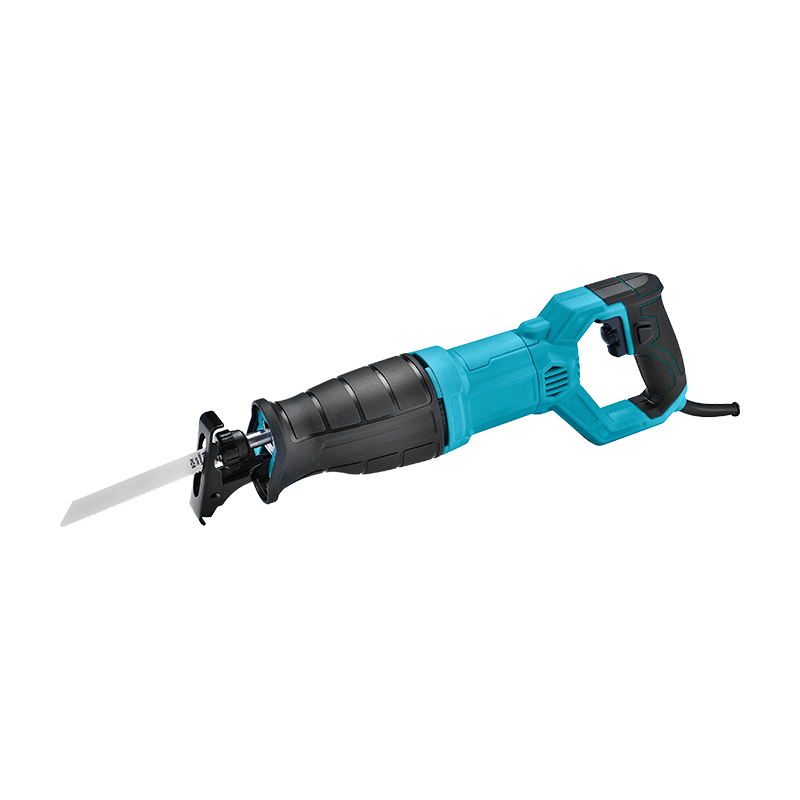
The landscape of professional power tools continues to evolve, with a clear trend toward specialization, efficiency, and user-centric design. Within this progression, the Recipitator Saw has established itself as a vital and distinct category of cutting equipment, designed specifically for tasks demanding precision and accessibility in constrained environments. Unlike its larger, more demolition-oriented counterpart—the standard reciprocating saw—the Recipitator Saw is engineered for finesse, often utilized by plumbers, electricians, HVAC technicians, and finish carpenters. Its growing prominence reflects an industry-wide response to the nuanced demands of renovation, retrofit, and detailed installation work, where the ability to make clean, controlled cuts without damaging surrounding materials is of paramount importance. The market for the Recipitator Saw is supported by the ongoing need for infrastructure maintenance, the rise of smart home installations requiring non-invasive modifications, and a broader professional emphasis on tools that reduce physical strain and improve on-site productivity.
The fundamental design philosophy of the Recipitator Saw centers on compactness, control, and maneuverability. These tools are typically more slender and lighter than full-sized reciprocating saws, featuring a shorter stroke length that provides greater blade stability and accuracy. This design allows the Recipitator Saw to operate effectively in tight spaces where a larger tool simply cannot fit, such as between wall studs, inside cabinetry, under sinks, or within crowded mechanical rooms. The incorporation of advanced lithium-ion battery technology has been transformative for the Recipitator Saw, granting complete cordless freedom. This eliminates the hazards and limitations of power cords, enabling technicians to move effortlessly around a job site, work on ladders, or operate in areas without readily available electrical outlets, thereby significantly enhancing operational fluidity and reducing setup time for complex tasks.
Technological innovation within the Recipitator Saw category focuses on enhancing precision, reducing operator fatigue, and improving material-specific performance. Key features now commonly integrated include variable speed triggers with fine-tuned electronic control, allowing the user to start cuts slowly in metal or plastic to prevent grabbing and to adjust speed dynamically for different materials. Tool-free blade change mechanisms enable swift swapping between specialized blades—from fine-toothed blades for cutting copper or PVC pipes to bi-metal blades for nails and light-gauge metal. To further aid precision, many models are equipped with bright LED lights that illuminate the cutting line in dark workspaces, and dust extraction ports that help keep the cut line visible and the work area clean. Advanced vibration dampening systems are also critical, as they less the transfer of jarring motion to the user’s hands and arms during extended use, contributing to better control and reduced long-term physical strain.
The development trajectory for the Recipitator Saw is aligned with the broader movement toward smarter, more connected, and more sustainable tool ecosystems. We can anticipate further integration of brushless motor technology for increased efficiency and longer tool life. Connectivity features, such as Bluetooth-enabled diagnostics, may become more common, allowing for performance tracking, maintenance scheduling, and even firmware updates to optimize cutting algorithms. Ergonomic research will likely yield even lighter and better-balanced designs, potentially incorporating new composite materials. As battery energy density improves, runtime will extend without adding bulk, making the cordless Recipitator Saw an even more compelling alternative to corded models.
Recommended Products
Contact Information
Mob: +86-13486952519
Whatsapp/wechat: +86-13486952519
E-mail: [email protected]
Add: Dawu Village, Huajie Town, Yongkang, Jinhua City, Zhejiang Province, China
Product
Contact Us!
Copyright © by Yongkang Zhongyuan Industrial & Trade Co. Ltd. Rights Reserved.

Curve Cutting Saw Factory


