 English
 русский
 Español
Email us now!
Email us now!
Industry News
 2026.03.06
 Industry News
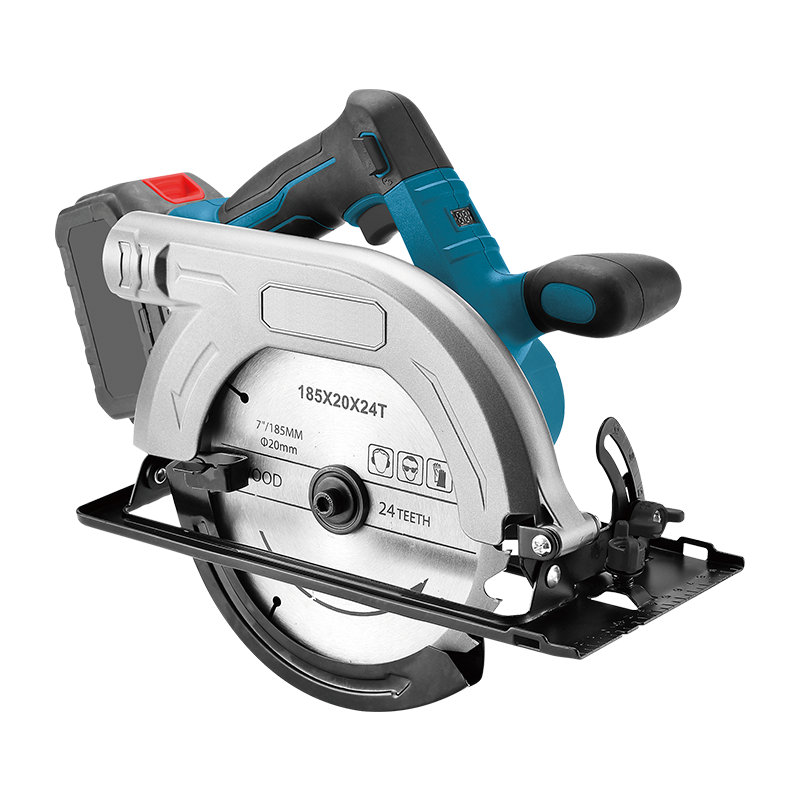
The angle circular saw has established itself as indispensable equipment in workshops and job sites where precision cutting determines project success. This versatile power tool, characterized by its adjustable base and rotating blade configuration, enables operators to execute straight cuts and angled incisions with remarkable accuracy. Experienced craftsmen and weekend DIY enthusiasts alike have integrated the angle circular saw into their regular tool rotations, recognizing its capacity to handle diverse materials while maintaining consistent performance standards.
The operational advantages of the angle circular saw become evident when considering its adaptability to varying cutting requirements. Unlike stationary saws that demand materials be brought to the machine, the angle circular saw travels to the workpiece, offering flexibility that proves invaluable in confined spaces or when handling oversized materials. Operators appreciate the ability to adjust cutting angles quickly, transitioning between ninety-degree crosscuts and forty-five-degree bevels without interrupting workflow. This versatility means the angle circular saw serves equally well for framing construction, cabinet fabrication, and furniture building projects.
Safety considerations have driven significant evolution in angle circular saw design, with manufacturers implementing features that protect users without compromising functionality. Blade guards retract automatically during cutting operations and return to protective positions when the saw leaves the material, reducing accidental contact risks. Electric brakes stop blade rotation within seconds of trigger release, preventing injuries from coasting blades during momentary distractions. Modern angle circular saw models also incorporate anti-kickback mechanisms that reduce reaction forces when blades bind unexpectedly, enhancing operator control during challenging cuts.
Precision engineering distinguishes quality angle circular saw units from basic alternatives, with components designed to maintain accuracy through years of demanding use. Sturdy base plates resist flexing under pressure, ensuring cuts remain true to marked lines even when sawing dense materials. Depth adjustment mechanisms hold settings securely, preventing blade exposure variations that could compromise cut quality or create safety hazards. Bevel stops machined to exact angles allow operators to return repeatedly to specific settings without time-consuming remeasurement, streamlining production work where consistency matters.
Material compatibility broadens the utility of the angle circular saw across numerous applications. Wood workers rely on these tools for dimensional lumber, sheet goods, and engineered panels, selecting blades appropriate for each material's characteristics. Masonry blades transform the angle circular saw into effective tools for cutting concrete products, brick, and stone when wet cutting methods control dust. Metal-cutting configurations handle ferrous and non-ferrous materials with proper blade selection and cutting techniques, demonstrating the angle circular saw's adaptability across trades.
Power delivery systems in contemporary angle circular saw units balance performance requirements with user comfort considerations. Brushless motor designs extend tool life while delivering increased runtime from cordless battery platforms that free operators from outlet constraints. Corded models maintain consistent power for continuous heavy use, appealing to professionals whose workloads demand uninterrupted operation. Variable speed controls on advanced angle circular saw models match cutting speeds to material properties, optimizing cut quality and blade longevity across diverse applications.
As construction practices evolve and DIY culture expands, the angle circular saw maintains relevance through continuous refinement and adaptation. Its fundamental utility transcends trend cycles, anchored in the universal requirement for straight and angled cuts in materials that form built environments. Whether operated by professionals erecting structures or homeowners completing weekend improvements, the angle circular saw enables precise material transformation with efficiency that hand tools cannot match and complexity that larger machines cannot accommodate.
Recommended Products
Contact Information
Mob: +86-13486952519
Whatsapp/wechat: +86-13486952519
E-mail: [email protected]
Add: Dawu Village, Huajie Town, Yongkang, Jinhua City, Zhejiang Province, China
Product
Contact Us!
Copyright © by Yongkang Zhongyuan Industrial & Trade Co. Ltd. Rights Reserved.

Curve Cutting Saw Factory