 English
 русский
 Español
Email us now!
Email us now!
Industry News
 2026.03.13
 Industry News
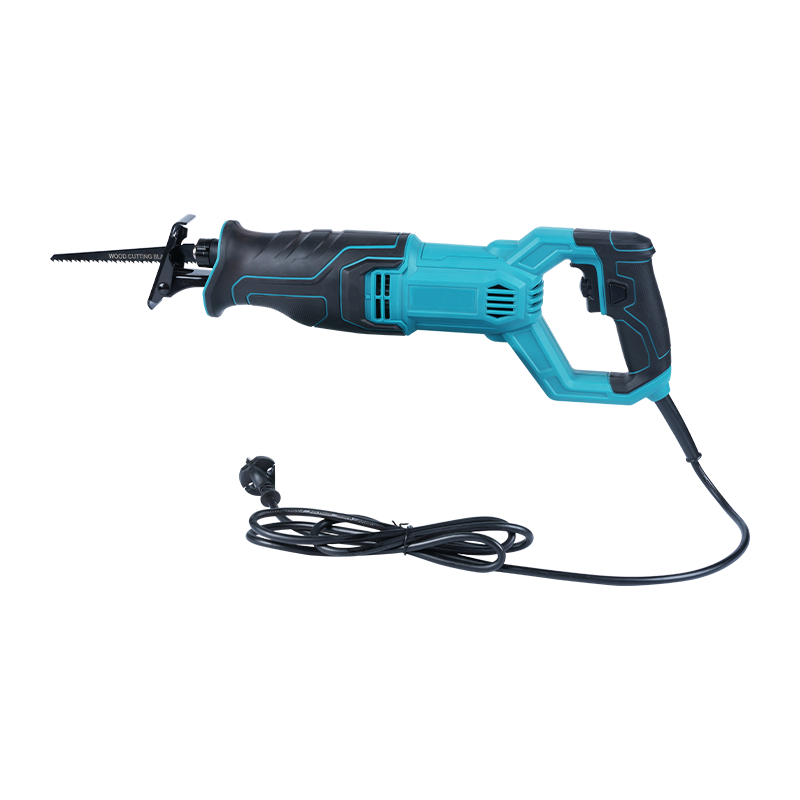
The industrial reciprocating saw has established itself as indispensable equipment on job sites where heavy cutting tasks challenge ordinary tools. This powerful machine, defined by its pushing blade action and rugged construction, delivers consistent performance when professionals encounter demolition, renovation, and construction work requiring aggressive material removal. Experienced operators across multiple trades recognize the industrial reciprocating saw as important gear for situations where standard equipment would falter.
The design philosophy behind the industrial reciprocating saw prioritizes durability above all other considerations. Reinforced housings protect internal mechanisms when tools encounter unexpected obstacles or operate in confined spaces where impacts are unavoidable. Heavy-duty gear trains transmit motor power efficiently to blade assemblies, maintaining cutting speed even under significant load. These construction choices ensure the industrial reciprocating saw survives the realities of daily professional use that would destroy lighter equipment.
Power delivery distinguishes the industrial reciprocating saw from consumer alternatives through consistent output during sustained operation. Motors engineered for extended duty cycles maintain performance during prolonged cutting without overheating or losing effectiveness. Corded models draw sufficient current to drive blades through dense materials effortlessly, while advanced cordless platforms provide runtime adequate for full workdays when paired with high-capacity batteries. This power reserve ensures cuts complete efficiently rather than struggling through materials and creating operator fatigue.
Blade interface features enhance both performance and versatility of the industrial reciprocating saw. Quick-change mechanisms allow operators to swap blades within seconds when transitioning between materials, small downtime during complex projects. Clamping systems maintain secure grip even during aggressive cutting movements, preventing slippage that could compromise accuracy. Variable stroke lengths on advanced models optimize cutting action for specific applications, with longer strokes moving material quickly and shorter strokes providing control in precision situations.
Vibration control technologies have transformed the industrial reciprocating saw into equipment operators manage comfortably throughout extended use. Counterweight mechanisms balance reciprocating forces, reducing transmission of vibration to hands and arms. Insulated gripping surfaces absorb remaining energy before reaching users, small fatigue and allowing maintained control during prolonged sessions. These refinements enable sustained productivity without the discomfort historically associated with this tool category.
Material versatility defines the industrial reciprocating saw's role across diverse applications. Demolition specialists equip these tools with blades that power through dimensional lumber, embedded nails, and light metals encountered during structure removal. Plumbers and electricians rely on industrial reciprocating saw units for cutting pipe, conduit, and cable tray during installation and repair. Tree care professionals adapt the tool for pruning where chain saws prove impractical, demonstrating adaptability across traditionally separate domains.
Control systems on modern industrial reciprocating saw units enhance precision during detailed work. Variable speed triggers allow operators to match blade speed to material characteristics, slowing for controlled cuts and accelerating for rapid removal. Orbital action settings on select models adjust blade movement patterns, with straight reciprocation providing precision and orbital motion increasing aggression for faster cuts. These controls transform the industrial reciprocating saw from simple demolition equipment into tools capable of refined cutting when situations demand.
The industrial reciprocating saw continues evolving through improvements that enhance capability without compromising fundamental utility. Battery technology advances extend cordless runtime while reducing weight, liberating operators from power cord constraints. Blade metallurgy improvements maintain sharpness longer while resisting breakage during demanding cuts. Each refinement builds upon the industrial reciprocating saw's established reputation for reliable performance when ordinary tools prove inadequate for challenging professional applications.
Recommended Products
Contact Information
Mob: +86-13486952519
Whatsapp/wechat: +86-13486952519
E-mail: [email protected]
Add: Dawu Village, Huajie Town, Yongkang, Jinhua City, Zhejiang Province, China
Product
Contact Us!
Copyright © by Yongkang Zhongyuan Industrial & Trade Co. Ltd. Rights Reserved.

Curve Cutting Saw Factory