 English
 русский
 Español
Email us now!
Email us now!
Industry News
 2026.04.24
 Industry News
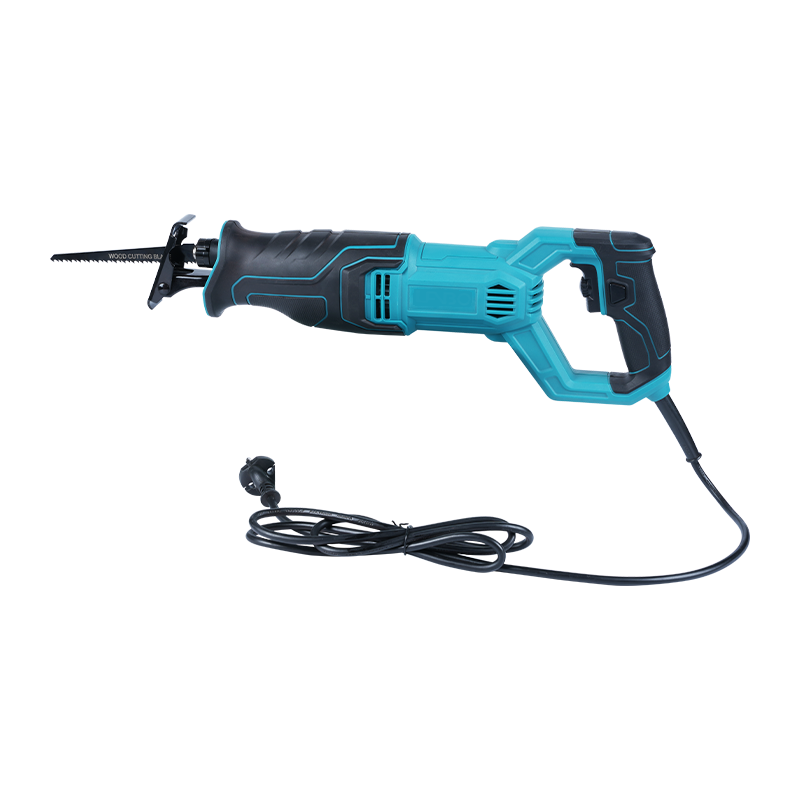
Heavy duty reciprocating saw is the tool professionals reach for when demolition, pipe cutting, and rough carpentry demand power and durability beyond what standard saws can provide. Unlike lightweight cordless models intended for occasional use, a heavy duty reciprocating saw is built to run for hours, cut through tough materials, and survive job site conditions.
The notable feature of a heavy duty reciprocating saw is its power. The motor delivers higher amperage or voltage compared to standard models, translating into faster cutting speeds and the ability to push through dense materials without bogging down. Cutting through nail-embedded lumber, thick metal pipes, or multiple layers of roofing material becomes a straightforward task rather than a struggle. The increased power also means the saw maintains blade speed under load, preventing the blade from stopping mid-cut.
Durability sets a heavy duty reciprocating saw apart from consumer-grade tools. The internal gear train uses metal components rather than plastic, reducing wear over years of use. The blade clamp mechanism is reinforced to withstand the vibration that loosens lesser designs. The housing is often wrapped in rubber or composite materials that absorb impact if the saw is dropped. A heavy duty reciprocating saw that receives basic maintenance can last through years of daily professional use.
Vibration reduction is a key engineering focus for heavy duty reciprocating saws. The reciprocating motion of the blade creates vibration that travels through the tool into the user’s hands and arms. Extended use of a poorly balanced saw leads to fatigue and discomfort. Heavy duty models incorporate counterbalance mechanisms that offset the blade’s motion, reducing felt vibration significantly. Some models use rubberized grips and padded handles to further isolate the user from vibration.
The stroke length of a heavy duty reciprocating saw affects cutting speed. Stroke length refers to how far the blade travels forward and back with each cycle. A longer stroke, typically one inch to one and a quarter inches, moves the blade through material faster than a shorter stroke. This matters when cutting large pipes, thick lumber, or stacks of material. A longer stroke also clears sawdust more effectively, preventing the blade from binding in deep cuts.
Variable speed control on a heavy duty reciprocating saw gives the user precise control over cutting action. The trigger is pressure-sensitive, allowing slow starts for delicate work or full power for aggressive cutting. Some models include a dial that sets a big speed, so the trigger acts within a chosen range. Slower speeds work well for cutting metal or plastic, where heat buildup can damage the blade or melt the material. Faster speeds excel in wood and demolition.
The orbital action feature on many heavy duty reciprocating saws adds a slight elliptical movement to the blade. This orbital action lifts the blade on the return stroke, clearing sawdust from the cut and allowing faster progress in softer materials like wood. For cutting metal or other hard materials, the orbital action can be turned off, keeping the blade movement purely back and forth for cleaner, more controlled cuts.
For professionals in construction, plumbing, electrical work, and demolition, the heavy duty reciprocating saw is an indispensable tool. It cuts through walls to remove old plumbing, slices through metal conduit, and tears out framing lumber with equal ease. When the job demands a saw that will not quit, a heavy duty reciprocating saw delivers the power and reliability to get the work done, hour after hour.
Recommended Products
Contact Information
Mob: +86-13486952519
Whatsapp/wechat: +86-13486952519
E-mail: [email protected]
Add: Dawu Village, Huajie Town, Yongkang, Jinhua City, Zhejiang Province, China
Product
Contact Us!
Copyright © by Yongkang Zhongyuan Industrial & Trade Co. Ltd. Rights Reserved.

Curve Cutting Saw Factory