 English
 русский
 Español
Email us now!
Email us now!
Industry News
 2026.04.17
 Industry News
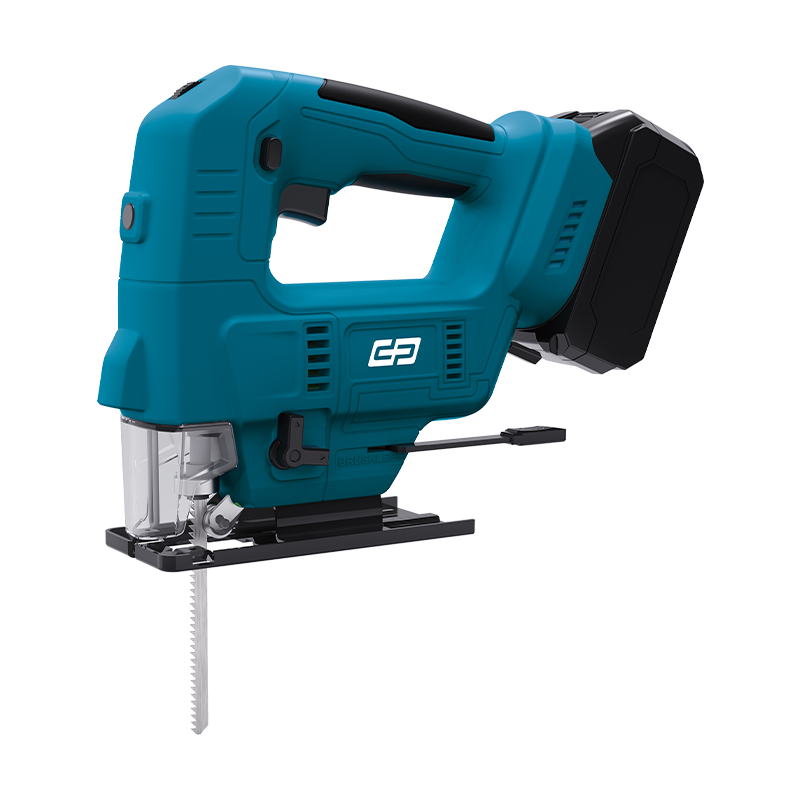
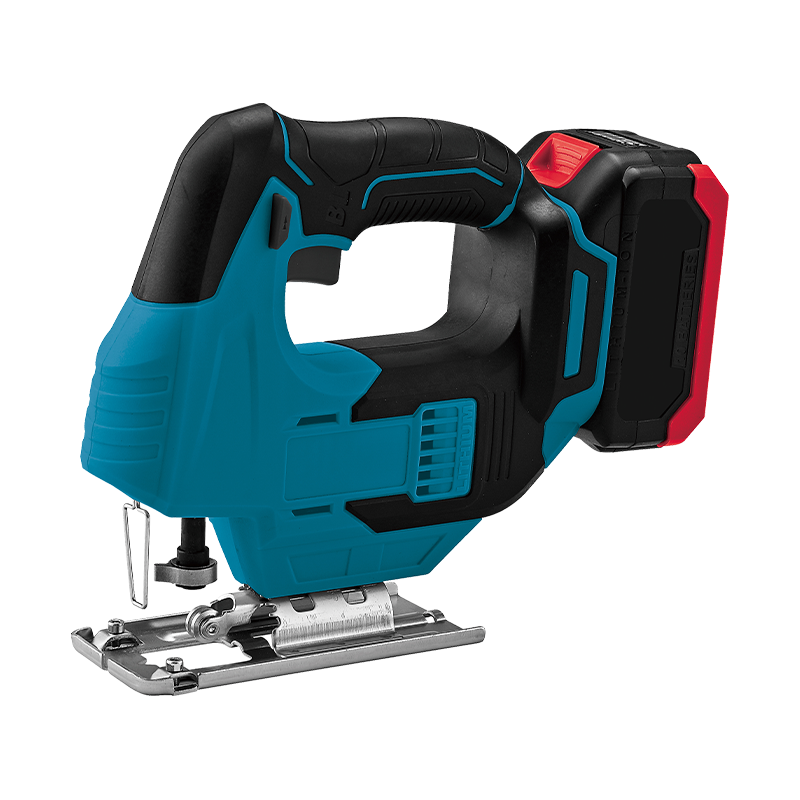
Battery jig saw has become a favorite tool among woodworkers, remodelers, and DIY enthusiasts who need to make curved cuts, cutouts, and intricate shapes without being tethered to a wall outlet. Unlike corded jig saws that limit movement to the length of an extension cord, a battery jig saw goes anywhere the user goes, from the top of a ladder to a backyard deck.
The main advantage of a battery jig saw is portability. The absence of a power cord means no tripping hazards, no extension cords to untangle, and no searching for an available outlet. This freedom matters when working on a roof, in a newly framed room without electricity, or at a job site where power access is limited. The user can carry the saw from one cut to the next without stopping to plug and unplug.
Battery technology has improved significantly, making cordless jig saws practical for serious work. Modern lithium-ion batteries hold enough charge to cut dozens of feet of material on a single charge. A fully charged battery can handle a morning of cutting plywood sheets or a full afternoon of trimming deck boards. For longer jobs, a second battery can be kept charging while the first is in use, allowing nearly continuous operation.
The cutting performance of a battery jig saw matches or exceeds corded models for tasks. The saw uses a reciprocating blade that moves up and down rapidly, typically at speeds between 1,500 and 3,000 strokes per minute. The user guides the saw along a marked line, and the blade cuts through wood, plastic, drywall, or thin metal. Orbital action settings cause the blade to move forward on the upstroke, cutting faster in softer materials.
Curved cuts are where a battery jig saw excels. Unlike circular saws that struggle with tight curves, a jig saw pivots easily, following lines that bend and twist. Cutting a circle for a sink cutout in a countertop, a curved edge on a shelf, or a decorative shape in a signboard are all tasks suited to a jig saw. The narrow blade allows a turning radius much tighter than any other portable power saw.
Blade changes on a battery jig saw are quick and tool-free on many models. A lever or button releases the blade clamp, allowing the old blade to be removed and a new one inserted in seconds. Different blades suit different materials. Fine-tooth blades cut smooth edges in plywood or laminate. Coarse-tooth blades cut faster in dimensional lumber. Special blades cut metal, plastic, or tile.
Variable speed control on a battery jig saw allows the user to match cutting speed to the material. Slower speeds work well for metal or hard plastics, preventing overheating and blade dulling. Faster speeds cut wood quickly but may cause splintering if the blade is not sharp or the orbital action is set too high. The trigger or dial control gives the user precise speed selection, which is especially useful for detailed work.
For anyone who makes curved cuts or works in locations without easy power access, the battery jig saw delivers cordless convenience without sacrificing cutting ability. It goes where cords cannot reach, starts every time with a charged battery, and handles everything from delicate curves to rough demolition. From workshop to jobsite, a battery jig saw is a versatile cutting tool that keeps working as long as you do.
Recommended Products
Contact Information
Mob: +86-13486952519
Whatsapp/wechat: +86-13486952519
E-mail: [email protected]
Add: Dawu Village, Huajie Town, Yongkang, Jinhua City, Zhejiang Province, China
Product
Contact Us!
Copyright © by Yongkang Zhongyuan Industrial & Trade Co. Ltd. Rights Reserved.

Curve Cutting Saw Factory