 English
 русский
 Español
Email us now!
Email us now!
Industry News
 2026.04.10
 Industry News
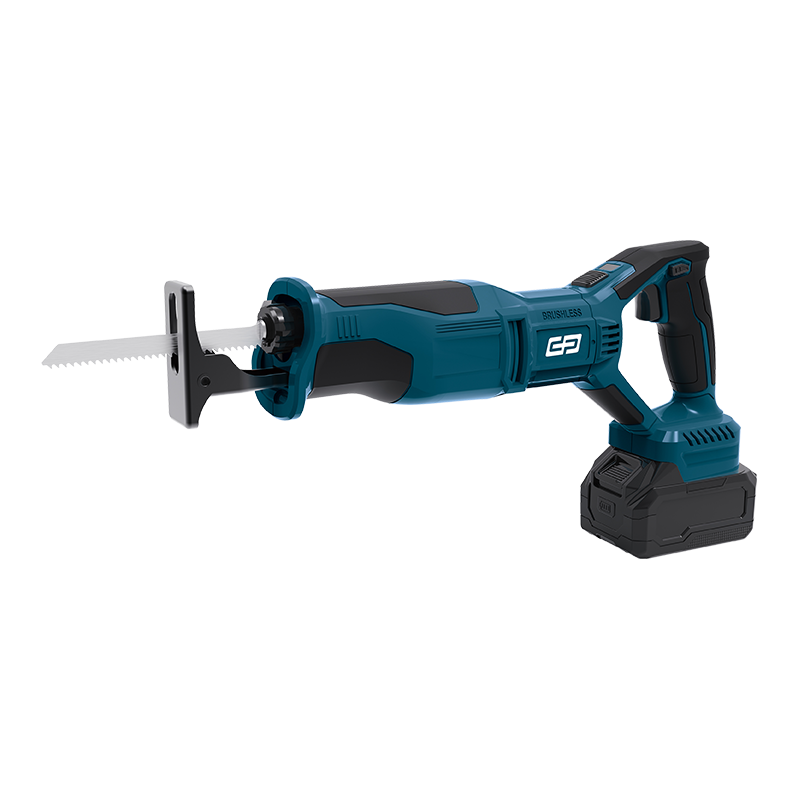
Lithium reciprocating saw has emerged as a preferred tool for many contractors and homeowners, as recent sales data and user surveys indicate a steady shift away from corded models toward battery-powered versions that offer greater mobility and convenience. Unlike older saws that required access to a wall outlet or a generator, the lithium reciprocating saw allows users to move freely around a job site, climb ladders, and work in tight spaces without dragging extension cords.
The appeal of this tool lies in its combination of portability and power. A typical lithium reciprocating saw uses a rechargeable battery pack that delivers consistent energy output until the charge runs low. This is a noticeable improvement over older nickel-based batteries, which tended to lose power gradually and required more frequent replacements. Professional builders have reported that a fully charged lithium battery can handle a full morning of cutting tasks, including demolition work, pruning branches, and cutting through pipes or pallets.
The reciprocating saw itself is designed for rough cutting. Its blade moves back and forth rapidly, allowing it to cut through wood, metal, plastic, and even nails embedded in lumber. Unlike a circular saw, which works ideal on straight, long cuts, the reciprocating saw excels at demolition and precision work in awkward spaces. It can start a cut in the middle of a surface by plunging the blade tip directly into the material. This feature makes it popular for removing old window frames, cutting openings in drywall, or trimming tree limbs that are too thick for hand shears.
Lithium battery technology has improved steadily over the past several years. Modern batteries hold a charge longer, recharge faster, and perform better in cold or hot weather compared to earlier versions. Many lithium reciprocating saw models also feature battery indicators that show remaining power, so users can plan their work accordingly. Some users keep a second battery charged and ready, swapping it out when the runs low. This approach allows for nearly continuous use throughout a workday.
The tool has found a place in various settings. Homeowners use a lithium reciprocating saw for yard work, small remodeling projects, and emergency repairs. Plumbers and electricians carry one for cutting through walls or floors to access pipes and wires. Property maintenance crews rely on it for quick demolition tasks. Unlike larger, stationary saws, the lithium reciprocating saw can be stored in a tool bag or a truck compartment without taking up much space.
Challenges exist. The cost of lithium batteries remains higher than that of corded tools, and batteries eventually lose their ability to hold a full charge after several years of use. Replacement packs can be a significant expense. Additionally, heavy continuous cutting—such as sawing through thick metal pipes all day—will drain a battery faster than light pruning work. Users who need all-day cutting may still prefer a corded model or keep multiple batteries on hand.
For many everyday tasks, however, the lithium reciprocating saw offers a practical balance of power and freedom. It has become a standard recommendation for tool kits, second only to the drill in many surveys of frequently used power tools. As battery technology continues to improve, the gap between corded and cordless performance is expected to narrow further. For now, the lithium reciprocating saw sits comfortably in the hands of professionals and hobbyists alike—ready to cut, compact enough to carry, and free from the tangle of cords.
Recommended Products
Contact Information
Mob: +86-13486952519
Whatsapp/wechat: +86-13486952519
E-mail: [email protected]
Add: Dawu Village, Huajie Town, Yongkang, Jinhua City, Zhejiang Province, China
Product
Contact Us!
Copyright © by Yongkang Zhongyuan Industrial & Trade Co. Ltd. Rights Reserved.

Curve Cutting Saw Factory