 English
 русский
 Español
Email us now!
Email us now!
Industry News
 2025.12.12
 Industry News
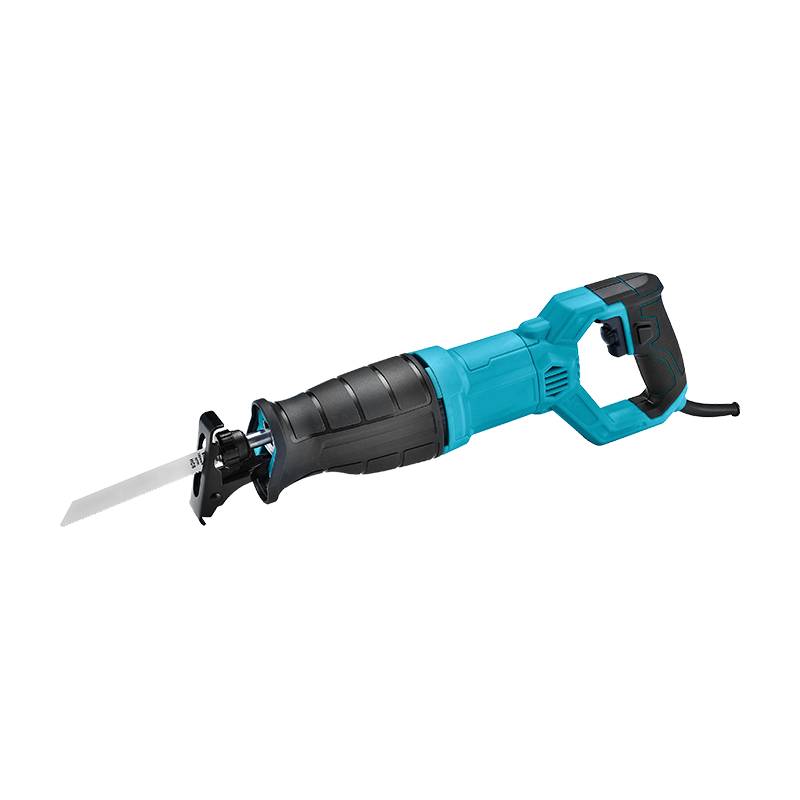
In construction, demolition, and industrial maintenance, professionals frequently encounter materials that require substantial cutting power and endurance. For these challenging applications, the heavy duty reciprocating saw stands as a preferred tool. Designed to deliver sustained high performance under rigorous conditions, this powerful variant of the common reciprocating saw is engineered to cut through dense and varied materials that would challenge or stall lighter-duty models.
The defining characteristic of a heavy duty reciprocating saw is its capacity to generate significant cutting force, or stroke power, and to withstand the vibrations and heat associated with prolonged use on tough substances. These tools typically feature a more robust motor, a sturdier gear housing, and a reinforced clamp system to hold the saw blade securely. The stroke length—the distance the blade travels back and forth—is often longer in a heavy duty reciprocating saw, enabling faster cutting in thicker materials by allowing each tooth to remove more material per cycle.
The applications for a heavy duty reciprocating saw are found in the demanding work environments. In building demolition, it is indispensable for cutting through wooden framing, nail-embedded lumber, plumbing pipes, and light-gauge metal studs. For metalworkers and emergency responders, a heavy duty reciprocating saw is a go-to tool for cutting steel pipes, rebar, and sheet metal, especially when paired with bi-metal or carbide-grit blades designed for such tasks. In landscaping and forestry, it can be used for pruning thick tree limbs or cutting roots. Its power and versatility make the heavy duty reciprocating saw a fundamental tool for tasks where a traditional handsaw is impractical and where brute cutting force is necessary.
Modern heavy duty reciprocating saw models increasingly benefit from advancements in vibration reduction and user ergonomics. Extended use of a powerful reciprocating saw can cause operator fatigue. Manufacturers address this with counterbalance mechanisms that dampen vibrations transmitted to the handle, and with ergonomic grips that provide better control and comfort. Some heavy duty reciprocating saw units also feature variable speed triggers, allowing the operator to match the cutting speed to the material—slower for metal, faster for wood—which enhances control and can extend blade life.
The choice of blade is as critical as the saw itself when deploying a heavy duty reciprocating saw. Blades are highly specialized: longer blades for deep cuts in wood, carbide-grit blades for masonry and fiberglass, and fine-toothed blades for clean cuts in metal. A key advantage of the heavy duty reciprocating saw is its quick, often tool-free blade change system, which allows workers to switch between blade types swiftly as job requirements change on site. The ability of the saw's clamp to prevent blade slippage under high load is a hallmark of a true heavy duty reciprocating saw.
The heavy duty reciprocating saw segment will continue to focus on improving power-to-weight ratios, enhancing battery life for cordless models, and integrating smart features like electronic feedback to prevent motor overload. As industries from construction to disaster recovery require tools that can perform reliably under stress, the role of the durable and powerful heavy duty reciprocating saw is set to remain central. It exemplifies the category of tools built not just for occasional use, but for the relentless demands of professional-grade work, proving itself as an essential implement for cutting through the toughest challenges.

Recommended Products
Contact Information
Mob: +86-13486952519
Whatsapp/wechat: +86-13486952519
E-mail: [email protected]
Add: Dawu Village, Huajie Town, Yongkang, Jinhua City, Zhejiang Province, China
Product
Contact Us!
Copyright © by Yongkang Zhongyuan Industrial & Trade Co. Ltd. Rights Reserved.

Curve Cutting Saw Factory