 English
 русский
 Español
Email us now!
Email us now!
Industry News
 2025.12.05
 Industry News
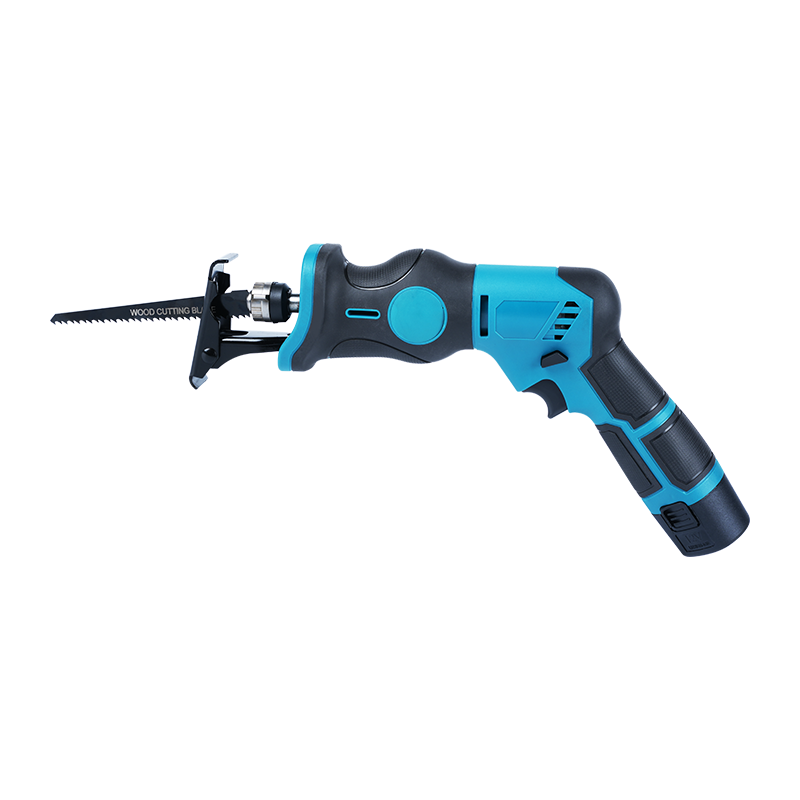
The landscape of professional construction sites and serious DIY workshops is being reshaped by the increasing dominance of the lithium reciprocating saw. This powerful and portable tool, once solely tethered to cumbersome cords and outlets, is now experiencing a significant evolution driven by advanced battery technology, fundamentally changing how users approach demanding cutting tasks.
At the core of this transformation is the shift from traditional power sources to high-capacity lithium-ion battery packs. The intrinsic energy density of lithium chemistry delivers the sustained high power output required for the demanding action of a reciprocating saw, which utilizes a rapid push-pull blade motion to cut through a vast array of materials. This cordless liberation means workers can easily operate the tool in remote locations, on rooftops, within confined crawl spaces, or anywhere access to mains power is limited or unsafe. The elimination of extension cords also enhances job site safety and improves overall workflow efficiency.
Modern lithium reciprocating saw models are engineered not only for raw power but also for improved user experience and control. Manufacturers have focused on reducing vibration through advanced counterbalance mechanisms and ergonomic grips, which decreases user fatigue during prolonged use. Variable speed triggers offer precise control for different materials, allowing an operator to carefully cut through a PVC pipe or aggressively demolish a wooden pallet with the same tool. Furthermore, tool-free blade change systems have become standard, enabling swift swaps between blades designed for metal, wood, or nail-embedded lumber, big the lithium reciprocating saw's renowned versatility.
The applications for a robust lithium reciprocating saw are extensive across multiple trades. Electricians and plumbers value its ability to make quick, flush cuts in conduit or piping. Demolition crews rely on its aggressive cutting stroke to tear through walls, trim joists, and cut away old fixtures. For landscaping and forestry work, the tool is indispensable for pruning tree limbs and cutting roots. The portable nature of the lithium-powered unit makes it particularly useful for emergency services and disaster recovery teams who need reliable cutting power in unpredictable environments.
The performance of these cordless tools is closely tied to the continuous advancements in lithium battery platforms. The development of longer-lasting cells and faster-charging technology ensures that users can depend on their lithium reciprocating saw throughout a full work shift. Compatibility with broader ecosystems of cordless tools from the same battery platform further incentivizes adoption, as professionals can power multiple devices—from drills to grinders—with a single set of interchangeable lithium batteries, reducing cost and complexity.
Market analysis indicates a steady growth trajectory for cordless power tools, with the lithium reciprocating saw category being a primary beneficiary. This trend is fueled by the undeniable advantages of cordless convenience coupled with performance that now rivals, and in many scenarios surpasses, that of corded counterparts. As battery energy density continues to improve and motor efficiency increases, the capability gap is expected to narrow further, solidifying the cordless lithium reciprocating saw as an essential tool for professionals and dedicated enthusiasts alike, empowering them to cut freely and efficiently wherever the job requires.
Recommended Products
Contact Information
Mob: +86-13486952519
Whatsapp/wechat: +86-13486952519
E-mail: [email protected]
Add: Dawu Village, Huajie Town, Yongkang, Jinhua City, Zhejiang Province, China
Product
Contact Us!
Copyright © by Yongkang Zhongyuan Industrial & Trade Co. Ltd. Rights Reserved.

Curve Cutting Saw Factory