 English
 русский
 Español
Email us now!
Email us now!
Industry News
 2026.01.23
 Industry News
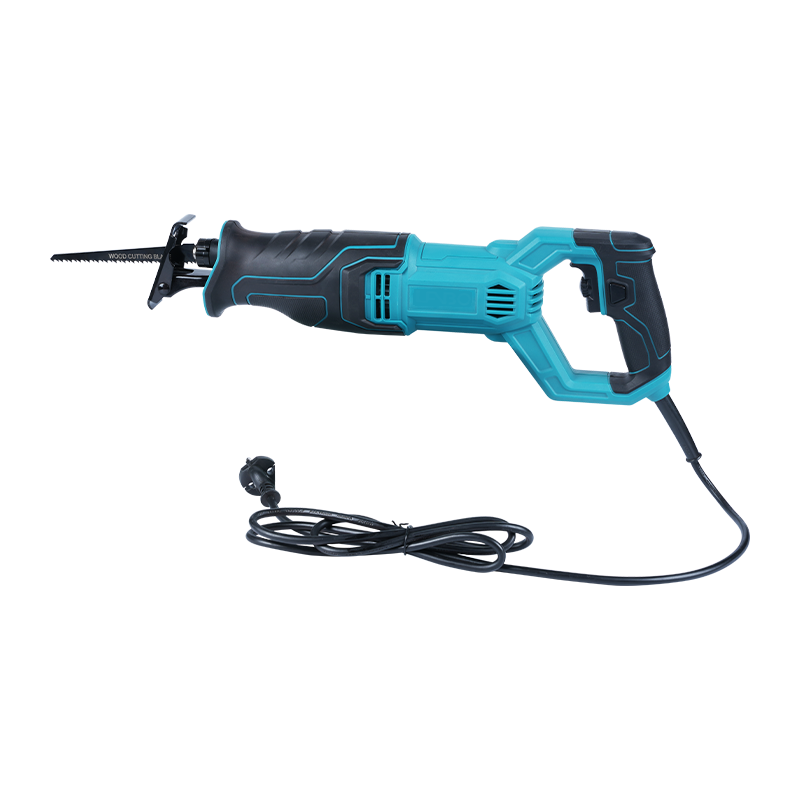
In the world of heavy-duty construction, demolition, and industrial maintenance, few handheld power tools offer the same combination of raw power and versatile cutting action as the industrial reciprocating saw. Characterized by its rapid back-and-forth (reciprocating) blade motion, this tool is engineered to tackle materials and situations that challenge other cutting instruments. The industrial reciprocating saw has evolved from a basic demolition tool into a sophisticated piece of equipment designed for durability, control, and adaptability in the demanding environments.
The fundamental advantage of the industrial reciprocating saw lies in its unique cutting action and accessibility. The blade moves in a push-pull stroke, allowing it to cut through a wide variety of materials without requiring a pre-drilled starting hole. This makes the industrial reciprocating saw ideal for plunge-cutting into walls, making flush cuts against surfaces, and tackling irregular shapes. Its ability to cut through an array of materials—including wood, metal, plastic, fiberglass, and masonry—with a simple blade change makes it an indispensable multi-purpose tool on job sites where conditions are unpredictable and space is often confined.
Durability and power are defining features that separate an industrial reciprocating saw from standard consumer-grade models. Built to withstand constant vibration, impacts, and exposure to dust and debris, these tools feature heavy-duty housings, robust gear trains, and high-torque motors capable of maintaining blade speed under significant load. Vibration dampening technology is critically important, as it reduces user fatigue during prolonged use and allows for greater control, especially when making precision cuts. Many industrial reciprocating saw models also incorporate brushless motor technology, offering improved efficiency, longer runtime, and reduced maintenance compared to traditional brushed motors.
Blade technology and compatibility are central to the industrial reciprocating saw's effectiveness. These tools utilize a standardized shank design (commonly a 1/2-inch or universal fit), allowing for quick blade changes. A wide selection of specialized blades is available, from long, flexible blades for cutting pipe in tight spaces to short, carbide-tipped blades for slicing through nails and hardened materials. Keyless blade clamping systems enable fast, tool-free changes, a vital feature for efficiency when moving between different cutting tasks. The inclusion of orbital action settings on many models adds a slight elliptical motion to the blade stroke, which can significantly increase cutting speed in softer materials like wood.
The application of the industrial reciprocating saw spans numerous critical fields. In demolition, it is used to cut through framing, pipes, and fasteners. In metal fabrication and plumbing, it trims conduit, cuts pipe, and removes bolts. In emergency rescue services, specialized industrial reciprocating saw models are deployed to cut through vehicle structures and other debris. The tool's ability to operate in any orientation and its relatively compact head make it superb for overhead work, cutting in trenches, or any scenario where a circular saw or band saw cannot reach.
The industrial reciprocating saw stands as a testament to purposeful, rugged engineering. It is not a tool of finesse in the traditional sense, but rather one of controlled power and relentless capability. By offering unparalleled versatility and brute-force cutting action in a portable format, it empowers professionals across industries to deconstruct, modify, and shape materials with confidence. As long as there are structures to be built, maintained, or taken apart, the industrial reciprocating saw will continue to be a fundamental and irreplaceable asset in the industrial toolkit.
Recommended Products
Contact Information
Mob: +86-13486952519
Whatsapp/wechat: +86-13486952519
E-mail: [email protected]
Add: Dawu Village, Huajie Town, Yongkang, Jinhua City, Zhejiang Province, China
Product
Contact Us!
Copyright © by Yongkang Zhongyuan Industrial & Trade Co. Ltd. Rights Reserved.

Curve Cutting Saw Factory