 English
 русский
 Español
Email us now!
Email us now!
Industry News
 2026.02.06
 Industry News
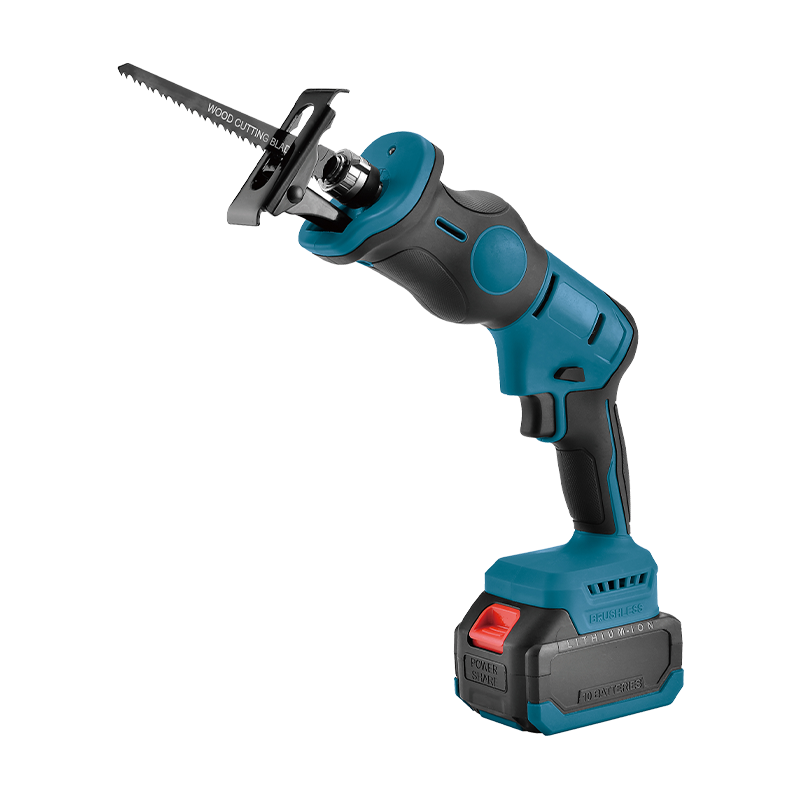
The power tool industry is undergoing a significant transformation, driven by advancements in battery technology and a growing demand for cordless solutions that do not compromise on performance. At the forefront of this shift is the Lithium Reciprocating Saw, a tool that has evolved from a niche, job-site specialty to a versatile mainstay for both professionals and serious DIY enthusiasts. The adoption of high-capacity lithium-ion battery platforms has liberated this powerful cutting tool from the constraints of power cords and pneumatic hoses, granting users exceptional freedom of movement and access. This evolution underscores how the Lithium Reciprocating Saw is reshaping expectations for on-site efficiency, safety, and convenience in construction, demolition, remodeling, and landscaping tasks.
The core advantage of the modern Lithium Reciprocating Saw lies in its fusion of robust electromechanical design with portable energy. The tool's mechanism—a motor that drives a push-pull ("reciprocating") motion of a saw blade—remains fundamentally unchanged, capable of making aggressive cuts through wood, metal, plastic, and other materials. The revolutionary change is the power source. Modern lithium-ion batteries offer a favorable balance of high energy density, rapid recharge capability, and consistent power delivery throughout the discharge cycle. This means a contemporary Lithium Reciprocating Saw can deliver the sustained power needed for demanding cuts, rivaling many corded models, while operating free from an outlet. This cordless nature eliminates tripping hazards, simplifies setup, and allows the tool to be used in remote or off-grid locations.
The performance and utility of a Lithium Reciprocating Saw are further enhanced by a suite of user-focused features that have become industry standards. Key among these is tool-free blade change systems, often a lever or collar mechanism, which allow operators to swap blades in seconds to match the material being cut—from coarse wood-cutting blades to fine-toothed metal blades. Variable speed triggers provide precise control over the cutting stroke, essential for starting cuts in metal or navigating through nails. Many models also incorporate orbital action settings, where the blade moves in a slight elliptical path in addition to its back-and-forth motion, delivering a more aggressive cutting action in wood, which can significantly speed up demolition and pruning work. An adjustable pivoting shoe (or "foot") provides stability against the work surface and allows users to improve the usable length of the blade as it wears.
The trajectory for the Lithium Reciprocating Saw points toward continued integration with digital ecosystems and ergonomic refinement. We can expect to see more models with Bluetooth connectivity, enabling tool tracking, usage monitoring, and battery management via smartphone apps. Advancements in brushless motor technology will further extend runtime and tool longevity. Ergonomic improvements, such as better vibration dampening and lighter, more balanced designs, will remain a focus to reduce user fatigue. As battery technology continues to advance, offering greater capacity in smaller packages, the power-to-weight ratio of the Lithium Reciprocating Saw will only improve, solidifying its position as an essential, go-to tool for any task that demands aggressive, portable cutting power, symbolizing the cordless revolution in the lots of demanding corners of the tool market.
Recommended Products
Contact Information
Mob: +86-13486952519
Whatsapp/wechat: +86-13486952519
E-mail: [email protected]
Add: Dawu Village, Huajie Town, Yongkang, Jinhua City, Zhejiang Province, China
Product
Contact Us!
Copyright © by Yongkang Zhongyuan Industrial & Trade Co. Ltd. Rights Reserved.

Curve Cutting Saw Factory