 English
 русский
 Español
Email us now!
Email us now!
Industry News
 2026.08.14
 Industry News
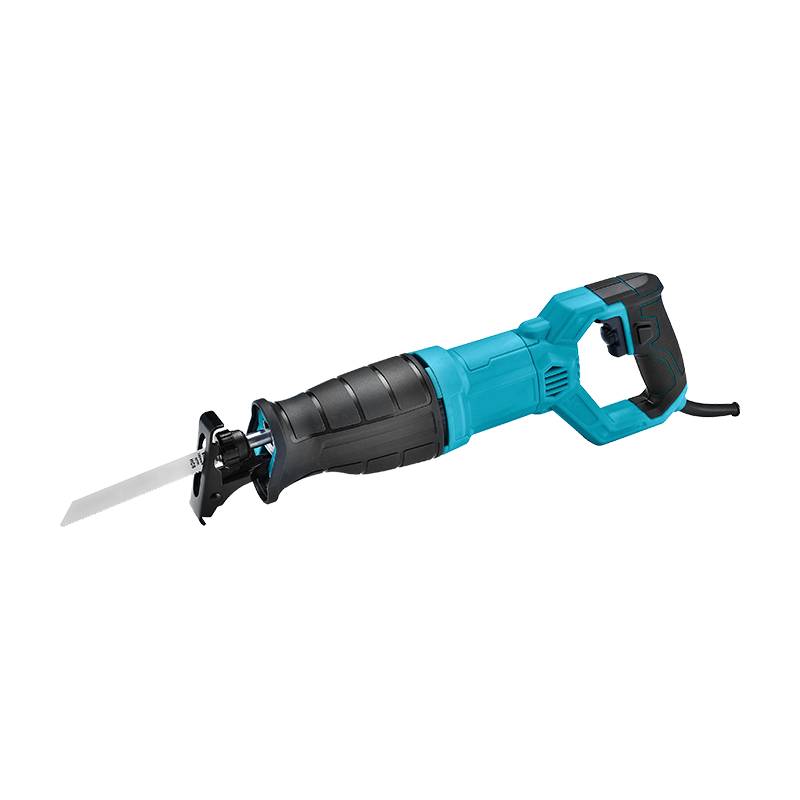
Cutting through wood studs, PVC pipe, or old metal brackets used to mean dragging an extension cord across a job site or working within reach of an outlet. That constraint has loosened considerably with the rise of the lithium reciprocating saw, a cordless tool that pairs the familiar push-pull cutting action of a reciprocating blade with a battery pack powerful enough to keep up with demanding cutting tasks.
The core cutting mechanism hasn't changed much over the years: a motor drives a blade back and forth at speed, letting it chew through material with repeated short strokes. What has changed is the power source. A lithium reciprocating saw swaps the corded motor setup for a rechargeable lithium battery pack, which delivers a steadier current than older battery chemistries and tends to hold its charge better between uses.
This shift matters more than it might sound. Corded models tie a worker to a fixed radius around an outlet, which becomes a real limitation in attics, crawl spaces, rooftops, or outdoor demolition work where power access is unreliable or nonexistent. A lithium reciprocating saw removes that constraint entirely, letting workers move freely across a site without pausing to find or run a cord.
One question that comes up often is whether a cordless saw can genuinely match a corded one in raw cutting power. Battery technology has closed much of that gap in recent years. Voltage ratings, cell configuration, and motor design all play into how a lithium reciprocating saw performs under load, and higher-voltage packs paired with brushless motors tend to sustain consistent stroke speed even when cutting through denser materials like thick lumber or nail-embedded framing.
A few factors shape how well a given saw handles tougher jobs:
Workers cutting through mixed debris during demolition, for instance, often notice that a well-matched battery and motor combination keeps stroke speed steady rather than bogging down partway through a thicker cut.
A lithium reciprocating saw shows up across a wide range of trades. Plumbers use them to cut through pipe in tight spaces where a corded tool's cord would be more of a hazard than a help. Electricians rely on them for quick modifications to framing during rough-in work. Demolition crews favor them for tearing into walls, removing old fixtures, or cutting through nail-filled studs without worrying about blade damage from an occasional embedded fastener.
Outdoor and remote work has also driven adoption. Landscaping crews trimming roots, or workers on job sites without established power hookups, benefit from a lithium reciprocating saw simply because it removes the dependency on nearby electrical infrastructure altogether.
Beyond raw cutting power, a lot of what separates one lithium reciprocating saw from another comes down to how it feels during extended use. Tool weight affects fatigue over a long shift, especially when cutting overhead or in awkward positions. Manufacturers have worked to balance battery weight against motor housing design so the saw doesn't feel front-heavy or awkward to control during longer cuts.
Vibration reduction has become another point of comparison. Some models incorporate counterbalance mechanisms that offset the back-and-forth motion of the blade, which can make a noticeable difference for workers making repeated cuts throughout the day rather than just a handful at a time.
Recommended Products
Contact Information
Mob: +86-13486952519
Whatsapp/wechat: +86-13486952519
E-mail: [email protected]
Add: Dawu Village, Huajie Town, Yongkang, Jinhua City, Zhejiang Province, China
Product
Contact Us!
Copyright © by Yongkang Zhongyuan Industrial & Trade Co. Ltd. Rights Reserved.

Curve Cutting Saw Factory