 English
 русский
 Español
Email us now!
Email us now!
Industry News
 2026.01.02
 Industry News
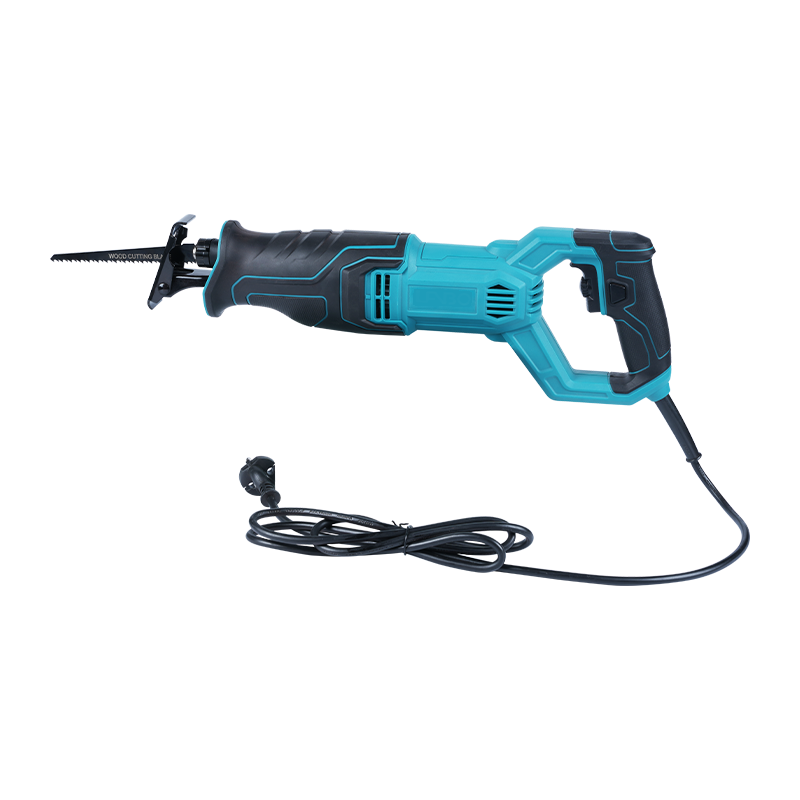
Across construction sites, renovation projects, and emergency response scenarios, the reciprocating saw remains a fundamental tool for demolition and rough cutting. Known for its distinctive push-pull blade action, this versatile power tool is designed to cut through a wide variety of materials where precision is secondary to speed and power. The enduring utility of the reciprocating saw lies in its ability to handle challenging cutting tasks that would stall or damage other types of saws.
The operational principle of a reciprocating saw is straightforward yet effective. The motor drives a blade holder in a rapid back-and-forth (reciprocating) motion. This linear action allows the saw’s tooth blade to aggressively bite into materials. A key feature of the modern reciprocating saw is its quick-release, tool-free blade clamp, which enables users to switch between specialized blades in seconds. Blades are available for cutting wood, metal, masonry, and nail-embedded lumber, making a single reciprocating saw adaptable to many sudden demands on a job site.
The primary application for a reciprocating saw is in demolition and remodeling work. It is the preferred tool for cutting through walls, pruning pipe, dismantling wooden frameworks, and cutting away old fixtures. Its ability to make plunge cuts—starting a cut in the middle of a material surface—is particularly valuable. For tradespeople like plumbers and electricians, a compact reciprocating saw is indispensable for quickly creating openings or removing obstructive sections of drywall, wood, or PVC. In salvage and rescue operations, the power and cutting ability of a reciprocating saw can be critical for creating access.
Technological improvements have consistently enhanced the user experience of the reciprocating saw. Vibration reduction technology, often through counter-balancing mechanisms or advanced grip design, has made prolonged use less fatiguing. Variable speed triggers are now standard, offering greater control for different materials—slower speeds for metal, faster for wood. Furthermore, the shift from corded to cordless reciprocating saw models has been significant. Modern lithium-ion battery packs deliver the high current required for the demanding start-stop action of a reciprocating saw, granting true portability without a noticeable loss in cutting power for many tasks.
The design of the reciprocating saw prioritizes function in tight and awkward spaces. Its narrow profile and the fact that only the blade needs to fit into a work area allow it to operate where larger circular saws cannot. This makes the reciprocating saw ideal for cutting in corners, between joists, or close to floors and ceilings. The robustness of the tool is also a major factor; a well-built reciprocating saw is expected to withstand dust, debris, and accidental drops common in rough construction environments.
The evolution of the reciprocating saw is likely to focus on further improving power-to-weight ratios in cordless models and enhancing ergonomic features to reduce operator strain. Integration with dust extraction systems may also become more common. However, its core identity as a powerful, adaptable demolition and cutting tool is firmly established. The reciprocating saw will continue to be a first-choice implement for professionals who need to cut, dismantle, and shape materials quickly and reliably in unpredictable conditions, securing its place in toolkits for the foreseeable future.
Recommended Products
Contact Information
Mob: +86-13486952519
Whatsapp/wechat: +86-13486952519
E-mail: [email protected]
Add: Dawu Village, Huajie Town, Yongkang, Jinhua City, Zhejiang Province, China
Product
Contact Us!
Copyright © by Yongkang Zhongyuan Industrial & Trade Co. Ltd. Rights Reserved.

Curve Cutting Saw Factory