 English
 русский
 Español
Email us now!
Email us now!
Industry News
 2026.07.03
 Industry News
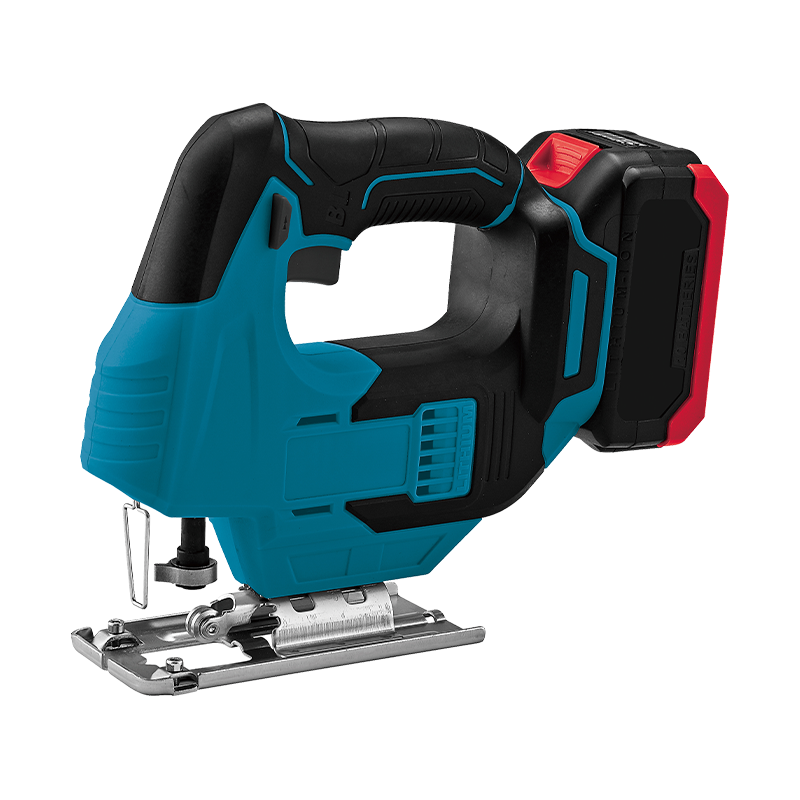
A battery jig saw offers cordless convenience for cutting tasks around the workshop or job site. This tool allows users to make curved and straight cuts in materials without needing nearby power outlets. Its portable nature supports work in different locations with relative ease. The saw has become a regular companion for both occasional users and those handling frequent projects.
The body of a battery jig saw features an ergonomic grip that helps with control during operation. A blade clamp holds the cutting blade securely while allowing quick changes when needed. Variable speed settings let users adjust the cutting pace according to the material at hand.
These features combine to support steady handling as the tool moves through wood, plastic, or thin metal sheets. The compact size aids maneuverability in tight spaces or when working on smaller projects. Users often note how the balance of the tool contributes to smoother operation over time.
A battery jig saw runs on rechargeable packs that provide freedom from cords during use. The power delivery supports consistent blade movement for various cutting depths. Users can swap batteries to extend work time on larger jobs.
This setup allows the tool to maintain performance across different tasks without interruption from power sources. The balance between weight and power helps reduce fatigue during extended sessions of cutting. Many appreciate the ability to work in remote areas or spots without easy access to outlets.
Craftspeople use a battery jig saw for creating shapes in furniture parts or decorative pieces. Construction teams employ the tool for fitting materials during installation work. Hobbyists turn to it for home projects that involve detailed cuts.
The saw handles straight lines as well as curves, making it useful for trimming, notching, and shaping tasks. Its portability supports use at various sites where materials need precise adjustment. The tool fits into both large-scale work and smaller creative endeavors around the home or shop.
Users guide a battery jig saw along marked lines while the blade moves in an up-and-down motion. Proper stance and two-handed grip improve accuracy during the cut. Orbital action settings can increase cutting speed in softer materials.
Attention to blade type helps match the tool to the job, whether working with hardwood or softer composites. The tool supports both rough work and more refined cutting in workshop environments. Selecting the right speed setting contributes to cleaner results on different material thicknesses.
A battery jig saw integrates into workflows for assembly, repair, and creation projects. The cordless design allows movement between stations without setup delays. Many users keep the tool within reach for quick adjustments on ongoing work.
Its presence supports a range of activities from initial material preparation to final fitting touches. The saw contributes to efficient progress on tasks that require accurate cuts in multiple locations. This flexibility makes it a useful addition for completing steps in various project phases.
The battery jig saw serves as a practical tool for cutting needs across different settings. Its features support a variety of users in completing projects with flexibility. The cordless operation opens up possibilities for work in diverse environments, from indoor workshops to outdoor job sites. Overall, it helps streamline many cutting-related activities in everyday practice.
Recommended Products
Contact Information
Mob: +86-13486952519
Whatsapp/wechat: +86-13486952519
E-mail: [email protected]
Add: Dawu Village, Huajie Town, Yongkang, Jinhua City, Zhejiang Province, China
Product
Contact Us!
Copyright © by Yongkang Zhongyuan Industrial & Trade Co. Ltd. Rights Reserved.

Curve Cutting Saw Factory