 English
 русский
 Español
Email us now!
Email us now!
Industry News
 2026.05.22
 Industry News
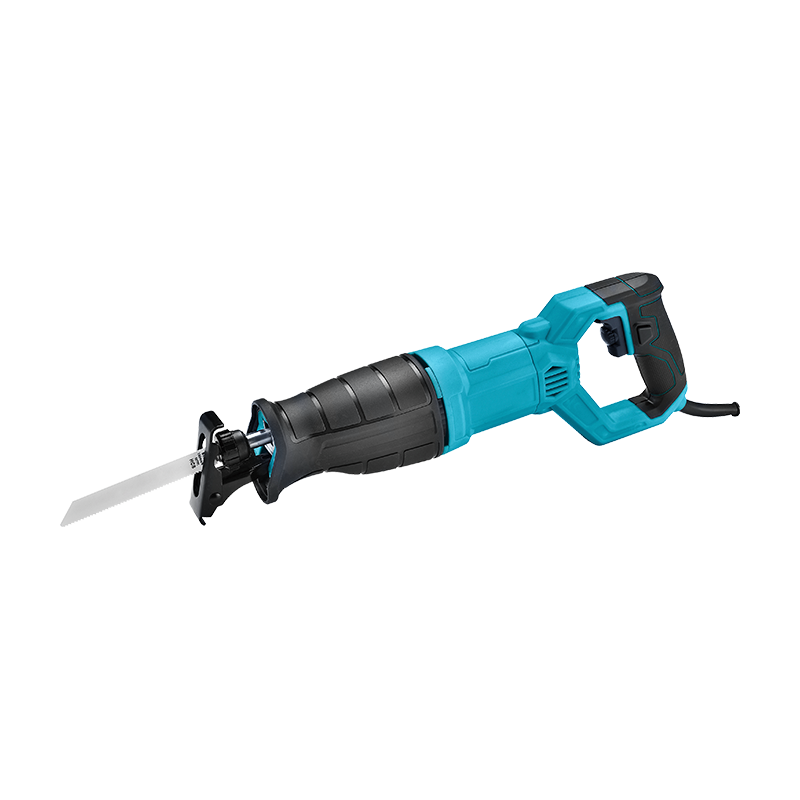
The industrial reciprocating saw has become a standard tool on construction sites, scrapyards, and emergency response vehicles. Unlike standard saws designed for clean, precise cuts, an industrial reciprocating saw delivers power for cutting through nails, rebar, and thick metal pipes. Demolition contractors and maintenance crews have adopted the industrial reciprocating saw for its ability to cut materials where other saws cannot fit. The aggressive cutting action of an industrial reciprocating saw explains its presence in tool inventories across multiple industries. Manufacturers continue to produce industrial reciprocating saw models with higher power ratings and improved vibration damping.
Motor design of an industrial reciprocating saw focuses on torque and durability. A brushless motor in an industrial reciprocating saw provides longer service life and higher efficiency than brushed designs. The power rating of an industrial reciprocating saw typically ranges from 10 to 15 amps for corded models. A cordless industrial reciprocating saw uses high-voltage battery packs ranging from 36 to 80 volts. The motor housing of an industrial reciprocating saw includes cooling vents to prevent overheating during extended use. A heavy-duty industrial reciprocating saw withstands daily use on job sites.
Stroke length and speed of an industrial reciprocating saw affect cutting performance. A longer stroke length on an industrial reciprocating saw removes more material per blade movement. Typical stroke length for an industrial reciprocating saw ranges from 28 to 32 millimeters. The strokes per minute of an industrial reciprocating saw reaches 2,500 to 3,000 under no-load conditions. A variable speed trigger on an industrial reciprocating saw allows the operator to match speed to material type. An industrial reciprocating saw with constant speed electronics maintains blade speed under load.
Blade clamping system of an industrial reciprocating saw enables quick blade changes. A tool-less blade clamp on an industrial reciprocating saw accepts blade insertion without wrenches. The blade should lock securely in an industrial reciprocating saw without wobble during cutting. A 4-position blade clamp on an industrial reciprocating saw allows the blade to be installed upside down for flush cutting. The blade compatibility of an industrial reciprocating saw includes both universal and manufacturer-specific shank styles. A worn blade clamp on an industrial reciprocating saw should be replaced to prevent blade ejection.
Orbital action feature on some industrial reciprocating saw models increases cutting speed. An orbital industrial reciprocating saw moves the blade in an elliptical pattern for aggressive cutting in wood. The orbital setting on an industrial reciprocating saw can be turned off for cutting metal or precision work. A higher orbital setting on an industrial reciprocating saw cuts faster but produces rougher edges. The orbital mechanism of an industrial reciprocating saw engages with the drive system when selected. An industrial reciprocating saw with orbital action suits demolition and rough carpentry.
Vibration reduction technology on an industrial reciprocating saw reduces operator fatigue. A counterbalance mechanism in an industrial reciprocating saw cancels some of the reciprocating mass vibration. The handle design of an industrial reciprocating saw isolates the user from transmitted vibration. An industrial reciprocating saw with lower vibration levels allows longer continuous operation. The anti-vibration system of an industrial reciprocating saw requires periodic inspection for worn parts. A smooth-running industrial reciprocating saw reduces hand and arm fatigue on all-day jobs.
The industrial reciprocating saw will likely continue as a demolition and rescue tool. For workers needing to cut through diverse materials, the industrial reciprocating saw offers a practical solution.
Recommended Products
Contact Information
Mob: +86-13486952519
Whatsapp/wechat: +86-13486952519
E-mail: [email protected]
Add: Dawu Village, Huajie Town, Yongkang, Jinhua City, Zhejiang Province, China
Product
Contact Us!
Copyright © by Yongkang Zhongyuan Industrial & Trade Co. Ltd. Rights Reserved.

Curve Cutting Saw Factory